Pets
-
 Super Admin
Posted on : 26 Sep 2026


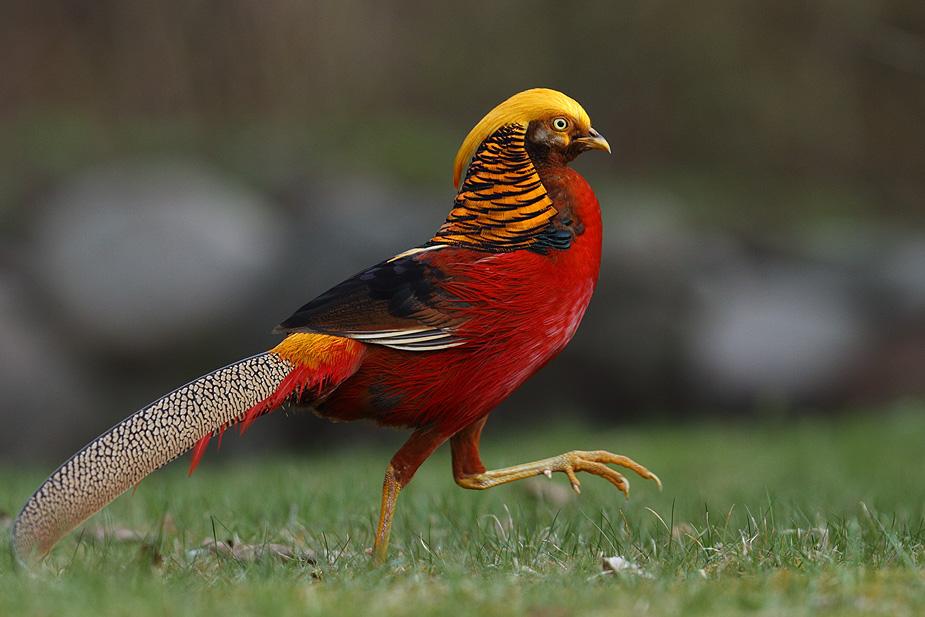
With its brilliant golden crest, red body and beautifully patterned feathers, the Golden Pheasant (Chrysolophus pictus) is one of the world's most spectacular ornamental birds.
At Wingsland Exotic Park, Nellipoyil, visitors can get a closer look at this beautiful pheasant and learn about its fascinating lifestyle.
The Golden Pheasant is native to mountainous forests of central and western China. It prefers forested areas with dense vegetation where it can find food and shelter.
Golden Pheasants show remarkable sexual dimorphism.
🟡 Male: Bright golden-yellow crest, red body, orange-and-black patterned neck feathers and a long, colorful tail.
🤎 Female: Much less brightly colored, with mainly brown and mottled plumage that helps provide camouflage.
They are omnivorous birds and naturally feed on:
🌱 Plants and leaves
🌾 Seeds and grains
🍓 Fruits and berries
🐛 Insects and small invertebrates
A balanced diet with suitable grains, greens and other appropriate foods is important in captivity.
Golden Pheasants need a spacious, secure and well-ventilated aviary that allows them to walk, forage and move comfortably.
A suitable setup should include:
Providing shaded areas is particularly important in warm climates.
Golden Pheasants are egg-laying birds. During the breeding season, the female prepares or selects a sheltered nesting area and lays a clutch of eggs.
The female incubates the eggs, and the chicks require protection, warmth and suitable nutrition after hatching.
Like other captive birds, Golden Pheasants can be affected by:
Clean surroundings, balanced nutrition, adequate space and regular health monitoring help maintain their wellbeing.
✨ The Golden Pheasant's spectacular colors are especially prominent in males.
✨ Females have brown, camouflaged plumage.
✨ They are primarily ground-dwelling birds but can fly when necessary.
✨ They spend considerable time foraging on the forest floor.
✨ Their long tail makes them particularly recognizable.